

Regenerative Agriculture Is Not a Goal. It Is a Risk Strategy That Most Companies Still Misunderstand
Why regenerative agriculture programs fail to scale and how companies can redesign them to reduce supply chain risk

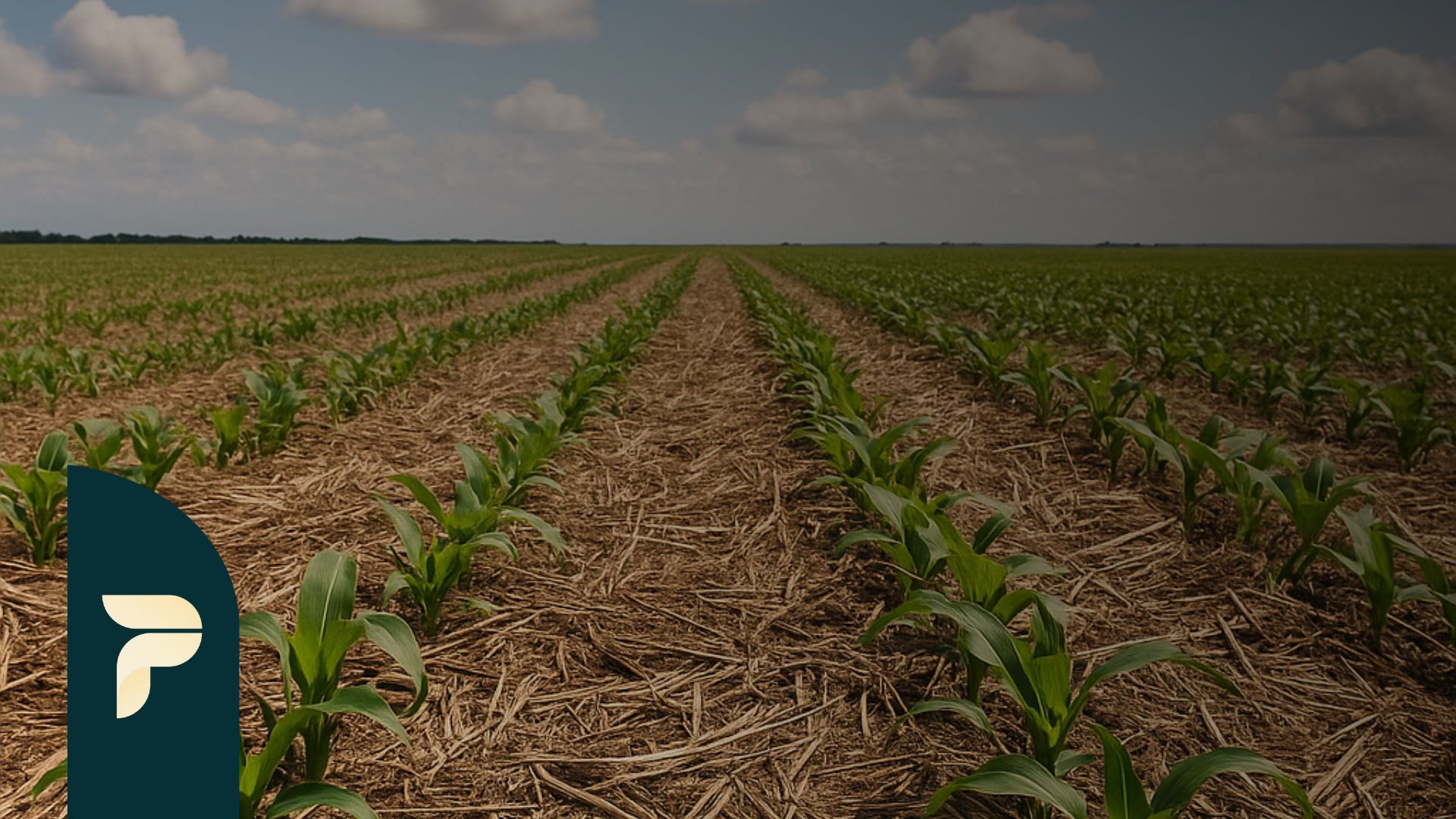
I recently began working with a company that had been investing in regenerative agriculture for several years. The intention was understandable. They wanted coherence with the corporate narrative of sustainable production while also showing progress toward carbon commitments. It looked responsible on paper and it followed market sentiment. But inside the company, the program remained stuck in permanent pilot mode. Multiple regions, enthusiastic teams, significant budgets, and yet no clarity on whether the work was producing any real progress.
The conversations were always the same. Meetings filled with discussions on KPIs that were interesting but never decisive. Indicators that looked sophisticated but did not answer the essential question of whether the soil was improving or whether the company was becoming more resilient. Teams debated measurement frameworks without knowing what success should look like. The program had become a collection of well intentioned initiatives with no strategic anchor, guided more by the momentum of the trend than by the needs of the business.
Everything changed when a new leadership team arrived. Without attachment to past investments, they began asking what the work was supposed to achieve and why the company was investing so much in something that had not matured. It quickly became clear that the program did not solve any business problem. It did not reduce exposure, stabilize quality, strengthen farmer relationships, or protect long term supply. It survived because it sounded right, not because it worked.
This example is not an outlier. It reflects a recurring pattern across the industry. Companies embrace regenerative agriculture because the narrative is strong and expectations are rising, but they neglect the foundational question. What problem is this approach meant to solve. When a program begins with the trend and not with the diagnosis, the outcome is predictable. Years of pilots, unclear metrics, frustrated teams, and little impact on the actual resilience of the supply chain.
Regeneration Treated as a Purpose Instead of a Strategy
Regenerative agriculture has become a symbol of responsible sourcing. But symbols cannot manage supply volatility or improve soil function. Narratives do not fix erosion or water stress. Companies often jump into practices before understanding conditions. They select metrics before establishing baselines. They focus on carbon before understanding the ecological and agronomic processes that carbon depends on.
When regeneration is treated as an end in itself, the result is a fragile program. It loses direction when budgets tighten or leadership changes. It becomes a reporting exercise rather than an operational strategy. And the work drifts away from the farmer reality it depends on.
Regeneration fails not because the idea is wrong but because most programs are designed as storytelling tools rather than resilience strategies.
Why This Structural Flaw Is Larger Than It Appears
A recurring weakness in many programs is the absence of baselines. Without knowing the initial condition of the soil and water system, it is impossible to know whether the landscape is improving or deteriorating. Yet many companies skip this step due to pressure to launch quickly or demonstrate early progress. This leads to a situation where data is collected but cannot guide decisions. Dashboards look complete but remain useless for operational planning.
Another problem is treating practices as outcomes. Practices describe what a farmer does, not the condition of the system. Their effectiveness varies dramatically by region, climate, soil type, farmer capability, and historical land use. What works in northern Europe may fail in central Brazil. What improves resilience in one region may increase exposure in another. When companies rely on practices as indicators of success, they cannot understand the real trajectory of risk.
There is also a persistent communication gap between corporate teams and farmers. Corporate language revolves around ESG commitments, carbon targets, internal scorecards, and external expectations. Farmers operate in a world of soil response, rainfall variability, yield risk, cash flow, and daily survival. When these perspectives do not connect, programs are designed in abstraction and then implemented in fields that do not match the assumptions behind the design.
Finally, regenerative agriculture often becomes ideological. For some people, it embodies an agricultural philosophy and a vision for how production should operate. But companies must operate on economics. When ideology dominates design, programs become romantic, inconsistent, and difficult to defend internally.
The Perspective That Rarely Appears in the Public Debate
What is missing from most discussions is a simple truth. Regenerative agriculture is not about agriculture. It is about risk. It is a framework for strengthening the ecological foundation of production so that supply becomes more predictable and less vulnerable to shocks.
When the soil retains more water, yield variability decreases.
When biological activity improves, dependence on synthetic inputs falls.
When erosion is controlled, productivity becomes more stable across seasons.
When farmers see consistent results, trust grows and relationships last longer.
When exposure to weather extremes declines, cost structures become more manageable.
This is the real function of regeneration. It reduces fragility. The problem is that most programs are not designed with this purpose in mind. They are designed to satisfy narrative expectations rather than operational needs.
What Companies Should Do Before Launching or Resetting Regenerative Programs
The first step is to define the business problem. If a company cannot identify the source of instability in its supply system, no regenerative strategy will generate value. The drivers may be yield volatility, declining quality, farmer turnover, climate exposure, water constraints, regional dependency, or increasing reliance on synthetic inputs. Without this diagnosis, the strategy becomes directionless.
The second step is to establish a measurement architecture before any pilot begins. This includes baselines for soil, water, carbon, and biodiversity, along with a concise set of indicators that reflect both agronomic conditions and business outcomes. Data should support operational decisions, not just reporting requirements.
Governance is the third pillar. Agronomists and soil scientists must play a central role. Procurement and sustainability teams must coordinate instead of operating in parallel. Farmers must receive clear expectations and feedback loops. Governance is what allows the program to survive leadership changes instead of collapsing under new priorities.
The final step is to convert data into decisions. Regeneration only creates value when it influences where to invest, where exposure is increasing, which farmers require support, which regions offer long term potential, and where the strategy must change. Without decision making, regeneration becomes a collection of activities rather than a resilience system.
Closing Reflection
After supporting companies on this journey, the conclusion is clear. Regenerative agriculture succeeds only when it stops being a slogan and becomes a structured approach to risk management. Supply chains cannot remain stable while the ecological systems beneath them erode. Regeneration is not attractive because it is fashionable. It is necessary because resilience requires it.
Companies that understand this will design programs that are credible, measurable, and grounded in agronomic and economic logic. Those that do not will remain trapped in pilot mode, wondering why nothing moves forward.
If your company wants a regenerative agriculture strategy that delivers real outcomes in the field and clarity in the boardroom, begin with one question. What risk must this program solve?
PS: I developed a program to help companies have more clarity on how to implement Regenerative Agriculture at scale and addressing business and supply challenges. More details here.
Our research team has done the math on sustainable carrying capacity. We can only support 3B humans.