

The offer was elegant. The market didn’t want it.
How three companies learned that the Brazilian agro is not a market.

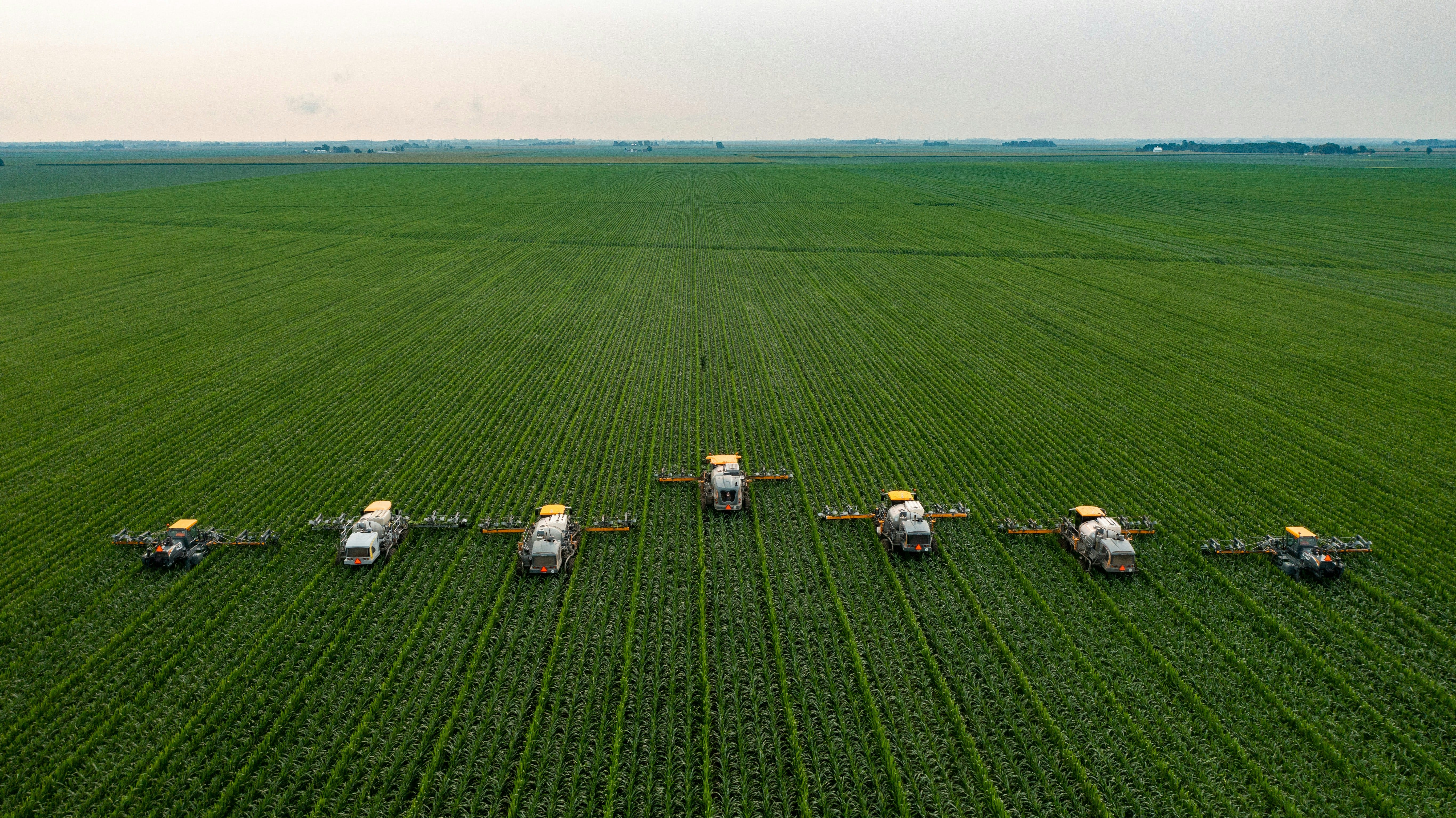
Photo from James Baltz - Unsplash
The product worked.
A system of precision fertilization maps, calibrated at farm level, promising measurable savings on input costs season after season. European engineering. Validated data. A business model built on recurring value, because the savings were meant to compound across cycles.
Then the company started talking to Brazilian farmers.
The first problem was easier to diagnose than expected. Farmers with mature fields, already mapped, already optimized, saw the offer as redundant. Their pain was not there.
The second problem was harder.
Farmers with new or marginal land, unmapped territory where the offer actually mattered, had a different issue. They valued the mapping. They paid for it. Once.
A field gets mapped once. The pain disappears after the first season.
But the business model was recurring. Built on the assumption that value would renew each cycle, the way it does with inputs, or finance, or insurance.
Value did not renew. The model did.
Two curves running in opposite directions. Value collapsing after year one. Revenue expectation climbing every quarter.
The gap between the two curves was not a pricing problem. It was an operating assumption that had traveled from Europe into Brazil untouched, and was breaking in a place nobody on the team had thought to check.
I joined as an advisor while they were still discovering this, not after. The pain was fresh. The question on the table was not whether the product worked. It was whether the offer could be rebuilt around something that compounded in the farmer’s reality, not in the founder’s spreadsheet.
That gap is where most foreign agtechs I work with die in Brazil.
Not because the product failed.
Because the offer was designed for a market the Brazilian agro is not.
The diagnosis
In Brazilian agriculture, pain points and revenue cycles almost never line up on their own.
A European SaaS mental model assumes a standing problem and a standing payment. Problem recurs each month or each year, software is renewed each month or each year, equilibrium is stable.
Brazilian farmer problems compound differently.
Some are one-shot. Map once, fix once, done. Precision fertilization on new land. A soil amendment plan. A diagnostic.
Some are cyclical but not in lockstep with a subscription. The problem appears at planting, disappears at harvest, returns in a different form the next cycle. The farmer adjusts practices, rotates crops, changes suppliers. The solution that worked last season may not be the one he needs this one.
Some are structural but sit outside what most agtechs offer. Market access. Financing cost. Climate risk exposure. Certification pathway. These renew every year, but most products do not speak to them.
The trap for foreign agtechs is assuming that a technical pain, once identified, behaves like a software pain. Install, use, renew.
It does not. Technical pain in Brazilian agriculture gets solved and then stops being pain. The farmer moves on. He is not disloyal. He is done.
This is the piece the team had to absorb, quickly, with a product that was already built.
The question they faced was not how to improve the product. It was how to connect the product to a source of pain that compounds.
Compound value is the piece most foreign offers miss. Input savings do not compound. A one-time mapping does not compound. A better recommendation that the farmer applies once does not compound.
Market access compounds. Certification pathways compound. Buyer commitments renewed across years compound. Risk mitigation over a full commodity cycle compounds.
The offer had to be rebuilt around the places where compound value actually lives in the farmer’s operation.
This was not a marketing rewrite. It was a business model rebuild, on the fly, while cash was running.
The pattern repeats
A few weeks ago, I had a conversation with the leader of a technology company that is not agricultural.
The company decided that the way to enter the Brazilian market was through agro. Growth thesis defensible at board level. Sector clearly in expansion. Capital available.
The company has no agricultural product. It has a thesis looking for a use case.
I listened to how the team was planning the entry. Commercial mapping of potential partners. Analysis of which segments of agriculture would be most receptive. A timeline for first pilots.
Everything looked rigorous.
And everything assumed that agro was a market they could enter with the right approach, the right partners, the right pitch.
The difference between a pilot that scales and a pilot that stalls almost never shows up in the commercial plan. It shows up months later, when the pilot is technically successful but commercially disconnected from anything the farmer would renew. By then, the round is further along, the investor expectations are higher, and the cost of rebuilding the offer is steeper.
The same operating assumption the European agtech arrived with, one layer earlier.
The European agtech had a validated product and assumed the offer would translate. This company does not even have a product yet, and is assuming they can design one by reading the market from outside.
The mistake sits in the same place.
Treating the Brazilian agro as a market with receptors, rather than a system with rules.
I do not know yet how this second case will end. The team is thoughtful and open. But the conversation gave me the clearest view I have had in a long time of how deep the assumption runs.
It is not about agricultural experience.
There are agtechs with a decade of sector DNA making exactly this mistake. And there are companies with no agricultural history that enter well, because someone inside the process reframed the entry before the first move was made.
The pattern repeats in any company that treats agro as a market to enter.
It does not repeat in companies that treat it as a system to join.
Market versus system
A market is a space where buyers and sellers meet, with prices as the coordinating mechanism.
A system is something else.
A system has rules that are not written down. Actors that do not appear on org charts. Memory that spans decades of programs that arrived, underdelivered, and left. Trust that is earned through showing up across seasons, not through landing the right pitch.
Brazilian agriculture, specifically, has all of this.
The farmer in Mato Grosso has seen foreign capital arrive with promises three times in the last ten years. He remembers the ones who disappeared. He remembers the ones who paid for two harvests and went silent when the commodity cycle turned. He is not waiting for your pitch with open arms.
This is not cultural quirk. It is operational memory, priced into every decision he makes about whether to let you onto his land.
Operational trust, in this sense, is a specific thing. It is not relational warmth. It is not dinner and handshakes. It is not the quality of the Portuguese you speak.
It is the evidence, accumulated over time, that you understand the economics of the farm, the rhythm of the season, and the risk the farmer carries when he tests something new.
When you have it, doors open. Gates open. Phones get answered.
When you do not have it, your Series B round and your technical white paper do not substitute.
This is the layer the three companies in this article had to cross, in different orders and with different degrees of awareness.
The first company crossed it in retrospect, by rebuilding the offer around what the farmer actually valued across cycles.
The technology company from outside agro has not crossed it yet, and may not, depending on how the team responds to what the system is telling them.
The third company handled it differently from the start.
The company that designed with the farmer
The third case I have been watching is a carbon platform entering LatAm through Brazil.
What made the entry different was the decision made at the design stage, before any commercial material was produced.
The team did not arrive with a finished value proposition. They arrived with a hypothesis, and they spent the first months designing the offer with producers, not for them.
That phrase looks small. It is not. Designing with, not for, is the move that separates companies that earn operational trust from companies that try to buy it.
Most foreign companies I have worked with design the offer in the headquarters, validate it with a few local advisors, and then present it to farmers expecting feedback on pricing and adoption.
This team did the opposite. The offer was co-shaped in conversations where the farmer’s concerns about risk, payback, certification complexity, and buyer credibility entered before the pricing logic did.
The consequence is visible now, months later.
The commercial pitch is not a foreign offer translated into Portuguese. It is an offer that already carries the shape of what the farmer said he needed, phrased in terms that resonate with how he thinks about his operation.
Conversion is higher. Resistance is lower. Referrals happen, which almost never happens in this sector unless trust has been earned.
The farmer is not just a customer. He is a co-designer with skin in the game.
This is the move that most foreign companies skip, because it looks expensive in time. It is expensive in time.
Designing with, not for, is the only move that compresses the later curve.
The companies that skip it pay the cost later in the form of pilot programs that stall, contracts that do not renew, and expansion plans that disappoint boards.
Three moves, anchored in the three stories
The pattern across the three cases compresses into three moves that separate companies that scale in Brazilian agro from companies that burn capital trying.
Start with farmer economics across the full cycle, not with the value proposition of the product.
This is what the European agtech had to rediscover the hard way. Farmer economics across the full cycle is not a number in a pitch deck. It is the answer to a specific question: what changes in the farm’s P&L across three or five years, and which part of that change actually compounds?
If the answer is a one-shot benefit, the revenue model cannot be recurring. If the answer is a compounding benefit, the offer has to be anchored where the compounding lives: in market access, in financing cost, in certification pathways, in buyer commitments. Not in the feature set of the software.
Farmer economics across the full cycle is the first filter. If the offer does not survive it, nothing downstream will.
Design the offer with the producer, not for the producer.
This is what the carbon platform did from the start. It is not participatory design as a nice touch. It is the only way to build an offer that survives first contact with the system.
Cost: months of time before the commercial machine starts turning.
Return: an offer that does not need to be rebuilt after the first pilots fail.
Treat operational trust as a precondition, not a consequence.
This is what the technology company from outside agro has not yet internalized. Trust in the Brazilian agro is not produced by selling well. It is what allows selling to happen at all.
Presence in the field. Consistent showing up across seasons. Cross-validation with cooperatives, technical advisors, buyers who have credibility in the region. This is infrastructure, not marketing.
Companies that invest here first feel slow at month six and win at month twenty-four. Companies that skip this feel fast at month six and stall at month eighteen.
The curves are not symmetric.
One bends upward. The other flattens.
What the three stories have in common
Three different starting points.
A European agtech with a validated product and a business model that did not match the shape of farmer pain.
A technology company from outside agro, trying to enter through a sector it does not yet understand, with a thesis that assumes a market rather than a system.
A carbon platform that refused to present an offer before the farmers had helped design it.
The difference between the three is not agricultural experience. It is not capital. It is not product sophistication.
It is the order of design.
The first two designed the offer in the headquarters and went to the field to sell it. The third designed the offer in the field and went to the headquarters to operationalize it.
That order determines whether the offer survives the system.
Most foreign companies entering Brazilian agriculture do not understand this on arrival. Some learn it, like the first company in this article. Some never do, and leave quietly after two or three expensive years.
The ones who know it before the first move are rare.
They are the ones building long-term businesses in a place where most visitors pass through and disappear.
In Brazilian agro, you do not enter a market. You earn the right to belong in a system. And the offer that earns that right is almost never the one you arrived with.
For those of you who have tried to scale an operation in Brazilian agriculture, whether you come from inside agro or from outside, where did the offer you arrived with have to be rebuilt?
What did the system show you that the headquarters did not see?
If you are in the middle of this decision right now, designing the offer, defining the entry, or rebuilding after a pilot that did not scale, a focused conversation usually saves months of wrong turns. I keep a few slots open each month for that. You can book one here: