

Regenerative Agriculture Does Not Have a Practice Problem. It Has a Structure Problem.
Two years into a program in Brazil, the funds ran out. The agronomy was not the issue.

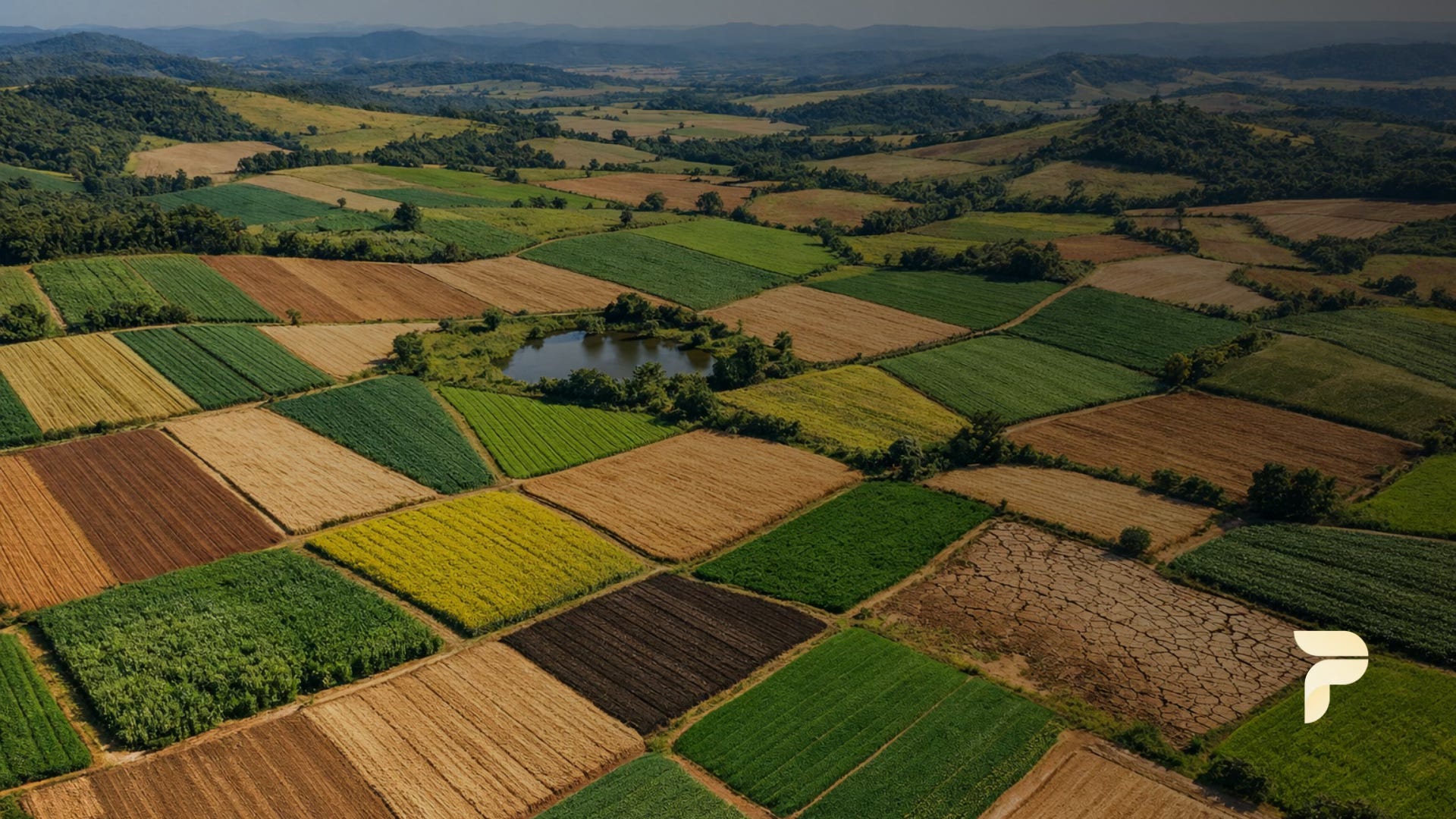
A few months ago, I was brought in to work with a company developing regenerative agriculture solutions in Brazil. They had been operating for two years. The team was committed. The agronomic work was real. They were recovering degraded land, building something meaningful on paper.
But the funds were running out. And the investors were getting uncomfortable.
The initial read from the inside was that this was an execution problem. The team needed to move faster, communicate better, show more results. Maybe bring in someone to help with investor relations.
That was not the problem.
As I worked through the structure of the program, three failures became clear. None of them were about execution. All of them were baked in from the beginning, before a single farmer changed a single practice.
The first failure: capital that did not match the biology
The program had been funded by private investors expecting returns on a timeline that had nothing to do with how land recovery actually works.
Recovering degraded land in Brazil is not a two-year project. The biological processes involved operate on cycles of five, seven, ten years. The first years carry the highest costs and the lowest certainty. That is not a problem with the program. That is the nature of the work.
But the capital structure was designed as if this were a conventional agricultural venture with a short payback period. Investors came in with short-term expectations. When the results did not arrive on that timeline, they did not recalibrate their expectations. They lost trust. In the project. In the numbers. In some cases, in the founder.
By the time I got involved, the relationship between the team and its investors had deteriorated to the point where raising a follow-on round from the same group was no longer realistic. Not because the program had failed agronomically. Because the capital structure had never been aligned with the biological reality of what was being built.
The second failure: demand that was assumed, not secured
Before the program launched, the team made a bet. They assumed there would be premium market demand for what they were producing. The assumption was not unreasonable. The narrative around sustainable sourcing was strong. Buyers were talking about regenerative supply chains. The signals looked positive.
But signals are not offtake agreements.
Two years in, the team was sitting on production capacity and agronomic learnings with no formal buyer commitments to anchor against. When I pushed on this, the answer was that the plan was to secure buyers once the production was more established.
The logic was backwards. Farmers change practices when they have market certainty. Without an offtake structure in place before the transition, the program was asking farmers to take on risk that the market had not agreed to absorb.
And when we started working backwards from actual buyer conversations, a more complicated problem surfaced.
The third failure: a cascade nobody had mapped
When we started talking to potential offtakers, their needs were specific. Particular crops. Particular quality standards. Particular geographies that fit their procurement and logistics models.
The crops the offtakers actually wanted were not the crops the program had prioritized.
That sounds like a simple fix. Change the crops. But in a regenerative system, crop selection is not an isolated decision. It determines which geographies make sense. Which geographies determine what agronomic systems are viable. Which agronomic systems determine what baseline assessments are needed, what the implementation strategy looks like, and what metrics actually matter. A buyer focused on quality specifications needs a completely different measurement framework than a program built around yield recovery.
The entire operational and verification architecture of the program had been built around the wrong anchor.
Two years of work, real agronomic progress, genuine farmer relationships. And underneath it all, a structural cascade that no one had mapped before the program started.
What this looks like from the outside
From the outside, this program looked like an execution problem. Slow results. Investor tensions. A team under pressure.
From the inside, it was a design problem. Every failure traced back to a decision, or a non-decision, made at the founding moment of the program.
This is not unusual. It is, in fact, the pattern I keep seeing across regenerative agriculture initiatives. The programs that struggle are not the ones with bad science or uncommitted teams. They are the ones that were never structured to work in the first place.
After spending the past weeks in conversations with investors, sovereign funds, and capital architects across multiple markets, the same picture keeps emerging. The programs that attract serious capital and achieve real scale share a common architecture. Five structural components appear consistently across all of them.
The five components of programs that actually scale
Demand before transition. Offtake agreements or buyer commitments need to be in place before farmers are asked to change practices. Demand anchors the system. Without it, every other component is exposed.
Catalytic capital to unlock the transition. The first years of regeneration carry the highest uncertainty and the lowest commercial returns. That phase requires grants, blended finance, or philanthropic capital, not to subsidize the program indefinitely, but to absorb the transition risk long enough for the commercial structure to prove itself. Expecting commercial capital to carry this phase from day one either blocks the capital raise or produces a cost structure that makes the program unworkable for farmers.
Risk protection for farmers. Yield insurance for transition years. Income guarantees against baseline production. Agronomic support that reduces the probability of failure. Without mechanisms that absorb some of the transition risk on the farmer side, adoption stalls regardless of how compelling the program looks on paper.
Patient capital aligned with biology. Soil systems and land recovery operate on biological timelines. Programs financed with capital expecting returns in two to three years create internal pressure that leads to shortcuts, verification compromises, and the kind of outcomes that erode trust, with investors and with farmers. Patient capital, with return expectations calibrated to the actual biological timeline, is not an idealistic ask. It is a structural requirement.
A real operator behind the program. This is the element most consistently underestimated. Regenerative agriculture programs are not financial instruments. They are complex operating systems involving farmers, buyers, capital providers, verification systems, and local institutions, all with different incentive structures and timelines. Someone has to design that architecture, operate it day to day, and hold it together when conditions change. The Brazil project I described had real components. What it lacked was an operator who had mapped the full system, including the demand side, before the program launched. That gap cost two years.
https://www.linkedin.com/posts/fabricio-peres-leader_5-pillars-for-well-structured-reg-ag-program-activity-7437218222338334720-YW9S?utm_source=share&utm_medium=member_desktop&rcm=ACoAAAAhIvoBvcmCmVHM_ZZu2zB6r5_JayKjF5k
The real question
There is a question that gets asked constantly in conversations about regenerative agriculture: does it work?
It is the wrong question.
The agronomic evidence is real. The market interest from buyers and consumers is real. The long-term case for soil health as a productive asset is real.
The right question is whether a specific program was structured to work from the beginning.
The program I worked with in Brazil was not a failure of regenerative agriculture. It was a failure of program design. The farmers involved were doing real work. The land was responding. But the capital structure, the demand architecture, and the operational logic had never been aligned into a system that could sustain itself through the transition phase.
Regenerative agriculture will not scale because the world finally understands its importance. It will scale when the programs built around it are designed with the same rigor applied to the biology.
The architecture is the strategy. Everything else follows from it.
If you are working on or evaluating a regenerative agriculture program and want to think through the structure, join the waitlist for the next cohort here: https://forms.gle/kxJaBuqqLaLS4xaY7
Great article. Easy to see the problems with hindsight, not the starting point. Then stuff happens - covid, death of farm manager, the weather changes, the government changes. As an implementer, its very hard to match up capital with biology, you have to take it from wherever you can find it, that's the reality. Everybody's looking to 10x. The implementer has to be a fundraiser, biologist, bastard (to keep everthing running), innovator, marketer, diplomat. That gets pretty tiring after a while.